| Quick Answer: Children have 20 baby teeth in a complete set — 10 on the top and 10 on the bottom. They usually finish coming in around age 3 and start falling out around age 6, finishing around age 12. Each baby tooth is eventually replaced by a permanent tooth, and adults end up with 32 permanent teeth (including 4 wisdom teeth). |
If you’ve been counting tiny teeth and wondering whether your child has the “right” number, you’re in good company. At Cabezon Pediatric Dentistry in Rio Rancho, it’s one of the most common questions we hear from parents of babies and toddlers. The short answer: a full set of baby teeth is 20.
Here’s the complete picture — how many baby teeth children have, what each type is called, when they arrive, when they leave, and why those temporary teeth matter more than most parents expect.
How Many Baby Teeth Do Children Have?
A complete set of baby teeth — also called primary teeth — is 20 teeth: 10 on the upper jaw and 10 on the lower jaw. Most children have all 20 in place by around age 3.
That’s 12 fewer than the adult set. Adults have 32 permanent teeth, because the jaw grows larger over childhood and makes room for additional molars, including the four wisdom teeth that arrive in the late teens or early twenties.
The Full Set of Baby Teeth by Type
Those 20 baby teeth come in five matched pairs on the top and bottom. Here’s the breakdown:
| Tooth type | How many | What they do |
|---|---|---|
| Central incisors | 4 (2 upper, 2 lower) | Front teeth; biting and cutting food |
| Lateral incisors | 4 | Next to the front teeth; cutting |
| Canines (cuspids) | 4 | Pointed teeth; tearing food |
| First molars | 4 | Back teeth; chewing and grinding |
| Second molars | 4 | Furthest-back baby teeth; grinding |
Add them up and you get 20 — the same five types repeated in each quadrant of the mouth.
When Do Baby Teeth Come In?
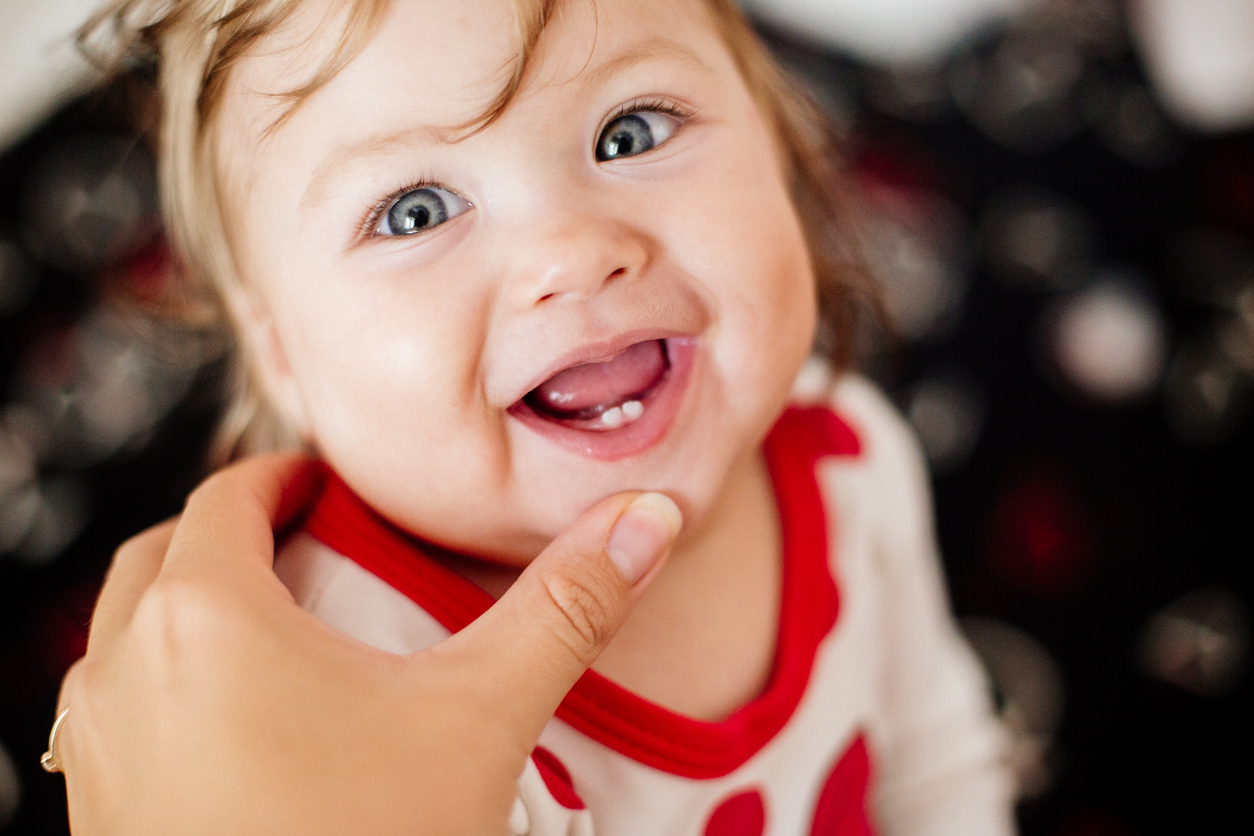
Most babies get their first tooth between 6 and 12 months, usually a lower central incisor. From there, teeth tend to erupt in a fairly predictable order. Every child is a little different, so don’t worry about matching these ages exactly.
| Baby teeth | Typical eruption age |
|---|---|
| Lower central incisors | 6–10 months |
| Upper central incisors | 8–12 months |
| Lateral incisors | 9–16 months |
| First molars | 13–19 months |
| Canines | 16–23 months |
| Second molars | 23–33 months |
We recommend a first dental visit by your child’s first birthday — or within six months of that first tooth, whichever comes first. Early visits help us catch issues early and help your child feel comfortable at the dentist from the start.
When Do Baby Teeth Fall Out?
Children usually start losing baby teeth around age 6 and finish around age 12. The lower front teeth typically go first, and the order of loss roughly mirrors the order the teeth came in. Permanent teeth push up underneath, loosening the baby tooth until it falls out on its own.
There’s a lot of natural variation here — some children lose their first tooth at 4, others closer to 7. As long as a permanent tooth is visible underneath when a baby tooth comes out, the timing is rarely a concern.
Why Baby Teeth Matter (Even Though They Fall Out)
It’s tempting to think baby teeth don’t need much attention since they’re temporary — but they do important work, and problems with them can affect the permanent teeth underneath.
- They hold space. Baby teeth save room for the permanent teeth and guide them into the correct position.
- They support speech. Teeth help children form sounds clearly as they learn to talk.
- They make chewing and nutrition possible. Healthy teeth let kids eat a full, varied diet.
- They protect the adult teeth. A cavity or infection in a baby tooth can damage the developing permanent tooth beneath it and cause pain.
That’s why early loss from decay or injury sometimes calls for a space maintainer — a small custom appliance that holds the gap open until the permanent tooth is ready to come in.
What’s Normal — and When to Call a Pediatric Dentist
Most variation in tooth count and timing is completely normal. A few situations are worth a quick check:
- A baby tooth that seems missing well past the typical eruption window
- Extra teeth, or teeth that look crowded or doubled up
- A permanent tooth erupting behind a baby tooth that hasn’t fallen out (“shark teeth”)
- Decay, pain, or swelling around any tooth
- A tooth lost early from a fall or injury
As a pediatric dental practice, we’re trained specifically in how children’s teeth develop, so we can tell quickly whether something is simply a normal variation or worth keeping an eye on.
Visit Cabezon Pediatric Dentistry in Rio Rancho
Our team in Rio Rancho serves families across Sandoval County — Rio Rancho, Bernalillo, Corrales, and west Albuquerque. Pediatric dentists complete years of additional training focused entirely on children, and we see kids from 9 months through age 18 (special needs to 26). Whether your little one is getting their first tooth or losing their last baby molar, we’re here to help. Schedule a first dental visit online or by phone.
Frequently Asked Questions
How many baby teeth does a child have?
A complete set of baby teeth is 20 — 10 on the top and 10 on the bottom. Most children have all 20 by around age 3.
How many teeth should a 2-year-old have?
By age 2, most children have around 16 baby teeth, with the second molars usually arriving between ages 2 and 3 to complete the full set of 20.
Why do kids have fewer teeth than adults?
Children have 20 baby teeth, while adults have 32. The jaw grows larger through childhood, creating room for additional molars — including four wisdom teeth — that the smaller child’s jaw can’t accommodate.
Do all 20 baby teeth fall out?
Yes. All 20 baby teeth are designed to fall out and be replaced by permanent teeth, generally between ages 6 and 12.
When should my child first see a pediatric dentist?
By the first birthday, or within six months of the first tooth coming in. Early visits help catch issues early and build positive feelings about the dentist.
|
Questions about your child’s teeth? We truly care about your child’s health and happiness. Reach out to get your child’s appointment scheduled. We can’t wait to see you. Cabezon Pediatric Dentistry │ 2421 Cabezon Blvd SE, Suite 101, Rio Rancho, NM 87124 │ (505) 884-5437 │ Contact Us → |